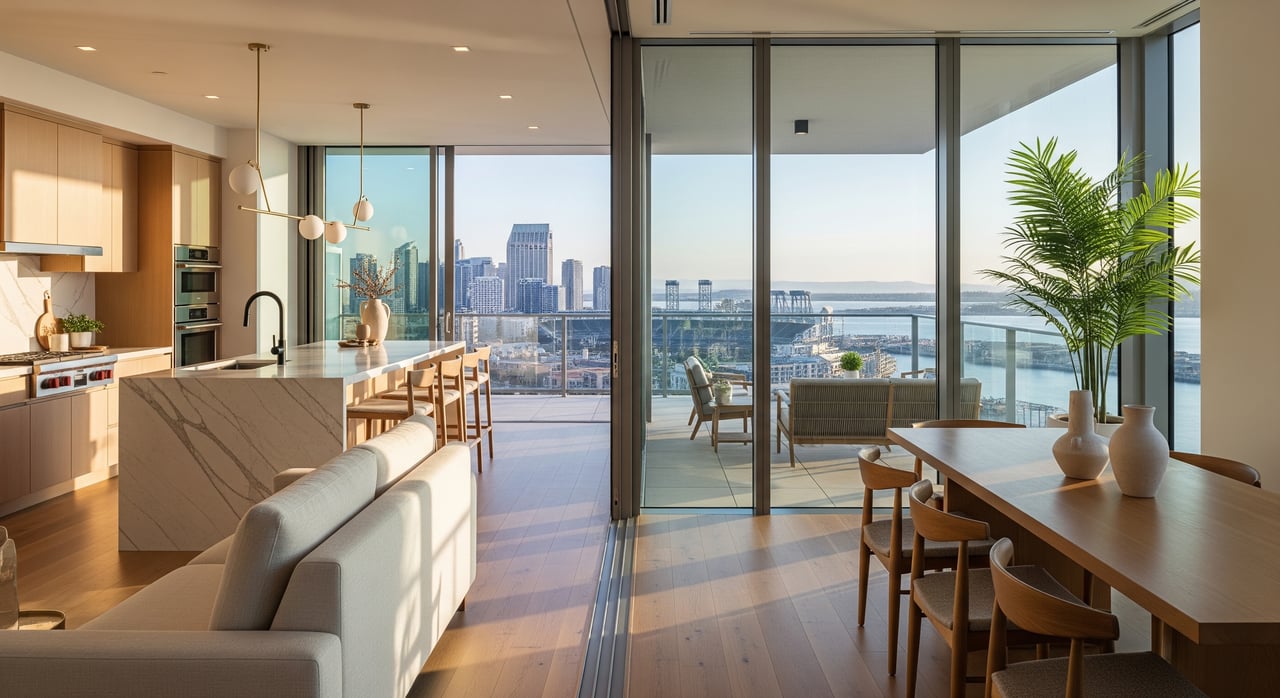
Ever imagined riding the elevator home to sweeping bay views, then stepping out for dinner on a lively, walkable street? If you crave convenience, skyline scenery, and low-maintenance living, a downtown San Diego high-rise could be a great fit. Still, every tower and sub-neighborhood within 92101 lives differently, from amenities and HOA rules to noise and parking. In this guide, you’ll learn what day-to-day life feels like, what to watch for on tours, and how to choose the right building for you. Let’s dive in.
Downtown 92101 at a glance
The 92101 ZIP covers several distinct sub-neighborhoods. The Marina District and Columbia often feature the tallest towers and best access to San Diego Bay. Gaslamp is nightlife-focused with late-evening activity. East Village offers a more urban mix with restaurants and Petco Park events. Cortez Hill and parts of Little Italy lean residential with a quieter vibe in some pockets.
Living near the Embarcadero and Port of San Diego puts waterfront paths, parks, and public art close by. Nearby freeways, including I-5 and key connectors, shape traffic patterns and commute options. Each area offers a different balance of activity, convenience, and views.
What daily life looks like in a tower
Views and sunlight
Depending on your orientation and floor, you might see San Diego Bay, Coronado and the bridge, the skyline, or Petco Park. Sunsets over the bay are a signature perk. Views can change if new buildings go up, so it’s smart to ask about any planned development or view easements. Visit at different times to gauge morning light, afternoon glare, and wind.
Amenities and services
Most high-rises offer secured entries, concierge or front desk, fitness centers, and pools or rooftop decks. You’ll often find package rooms or lockers, bike storage, and growing access to EV charging. Higher-end towers may add valet, spa or sauna facilities, and reservable lounges or guest suites. Smaller or boutique buildings can be simpler with essential amenities.
Walkability, transit, and access
92101 is highly walkable. Many residents grab coffee, groceries, and dinner within a few blocks. For broader access, you can use the MTS Trolley and extensive bus routes, with regional rail at Santa Fe Depot for Amtrak and Coaster. Rideshare, taxi, scooters, and bike-share are common. Public transit can cover daily needs, though many residents still keep a car for regional trips.
Dining and entertainment
You’re close to Gaslamp’s nightlife, theaters and event venues, Little Italy dining, and games at Petco Park. It’s a major lifestyle draw that puts concerts, festivals, and baseball within easy reach. The same energy can bring extra activity and crowds during peak times.
The practical side: costs and HOAs
Your total cost of ownership will include the purchase price, property taxes, and HOA dues. High-rise dues are often meaningful because they fund staff, security, building insurance, maintenance, reserves, and amenities. Some utilities like water and trash may be included, while electric, gas, and internet are often metered to your unit.
Because building maintenance needs vary, special assessments can occur for capital projects or deferred maintenance. Before you write an offer, request the HOA budget, reserve study, audited financials, insurance certificate, and recent meeting minutes. If you want specific numbers, rely on current MLS listings, HOA disclosures, and county records, and make sure to date any figures you reference.
Rules that shape your lifestyle
High-rises operate under recorded covenants and community rules. Common policies include:
- Pets: size or breed limits, pet deposits, and rules for common areas.
- Rentals: caps on the number of rentals, minimum lease terms, and short-term rental restrictions.
- Smoking: some towers are fully non-smoking, including balconies.
- Balconies: restrictions on items like barbecues or decor.
Always review CC&Rs, bylaws, and house rules. If renting is part of your plan, verify both building policies and the City of San Diego’s short-term rental requirements before committing.
Sound, safety, and building systems
Noise and how to evaluate
Noise sources vary by building and location. Areas near Gaslamp can be active late into the night. Proximity to Petco Park means crowd and event noise on game days. Traffic, construction, and the nearby airport flight paths can also contribute. Higher floors may reduce street-level noise, but rooftop equipment and wind can be more noticeable. Check the unit at multiple times, including weekend nights.
Safety, security, and seismic
Towers typically include fire sprinklers, multiple egress routes, and rated doors. Security often includes 24-hour coverage, front desk staff, cameras, and controlled access. San Diego’s seismic standards have evolved over time, and many newer buildings reflect those updates. Ask about any structural assessments, retrofits, and life-safety system maintenance.
Elevators and power outages
High-rises rely on well-maintained elevators. Some buildings have limited emergency power to keep lights and some elevators operating. Ask how outages are handled, how often systems are tested, and whether maintenance logs are available.
Parking, deliveries, and storage
Most condos include at least one deeded parking space, sometimes tandem or shared. Guest parking is often limited and may involve fees or time limits. Deliveries are easier in buildings with package rooms or lockers, though volume around holidays can be a factor. Storage is usually compact, with small lockers in the garage or storage rooms; confirm whether storage is deeded or leased.
Short-term rentals in downtown
San Diego regulates short-term rentals through permits, safety rules, and taxes. Many buildings restrict or prohibit short-term rentals through HOA rules. If you want the option to rent, you’ll need to verify both the city’s current permit requirements and the building’s rental policies, including any caps or minimum lease terms.
Tradeoffs to consider
- Private yard vs shared spaces: You give up a yard, but gain easy-care living, rooftop decks, fitness centers, and community lounges.
- Views and premiums: Bay and bridge views often command higher prices. Because development can change sightlines, ask about planned projects nearby.
- Family fit: Downtown includes a range of households. Some buildings lean more residential with quieter pockets. If schools are a top priority, explore options and transportation routes.
- Car-light living: Many daily needs are walkable or transit-friendly, though a car can still be useful for regional trips.
Your buyer tour checklist
Use this list to compare buildings and units with clarity:
- View and view permanence:
- Walk the balcony and main rooms at different times of day.
- Ask building management about planned or approved nearby projects and any view protections.
- Noise and activity:
- Visit on weekday daytime, evening, and weekend nights, especially if near Petco Park.
- Confirm window type, floor-to-floor soundproofing, and HVAC noise levels.
- HOA documents and finances:
- Request CC&Rs, bylaws, recent meeting minutes, current budget, reserve study, audited financials, and insurance certificate.
- Ask about pending litigation and special assessments.
- HOA rules:
- Confirm rental caps, minimum lease terms, short-term rental policies, pet rules, and balcony restrictions.
- Utilities and what’s included:
- Clarify which utilities the HOA covers and what is separately metered. Ask for typical monthly utility costs if available.
- Parking and storage:
- Verify deeded spaces, location, tandem arrangements, guest parking rules, and storage lockers.
- Building operations:
- Learn front-desk hours, staffing, on-site management, maintenance schedules, and package handling.
- Safety and building systems:
- Ask about fire system testing, elevator maintenance records, emergency power, and outage protocols.
- Upcoming projects and assessments:
- Review planned capital projects, funding sources, and timing.
- Insurance and unit boundaries:
- Determine what the HOA policy covers versus your personal policy requirements.
- Commute and access:
- Test drive or transit your commute at peak times. Consider regional connections at Santa Fe Depot.
- Resale and rental history:
- Ask about turnover rates, rental percentage, and average days on market.
How we help you buy smart in 92101
Choosing the right high-rise is about more than floor plans and finishes. You want confidence in the building’s financials, systems, and long-term livability. Our downtown-focused team helps you compare HOA budgets and reserve studies, confirm view risks, evaluate noise at key times, and understand true amenity value across towers. We coordinate showings, connect you with trusted lenders and insurance providers, and streamline your path from first tour to closing.
If you’re thinking about selling a condo, we also manage pre-listing improvements, staging, and marketing to position your property for top-of-market results. When you are ready to make a move in 92101, reach out to our team to learn which buildings fit your lifestyle and goals.
Ready to explore downtown towers or discuss your next step? Connect with Fine Properties San Diego for guidance, private tours, and our concierge approach. Sellers can also Request a Complimentary Market Valuation.
FAQs
What should I know about 92101 high-rise views before buying?
- Views can change as new buildings are approved, so ask about planned development and any view protections, and visit at multiple times to assess light and glare.
How noisy is it to live near Gaslamp or Petco Park?
- Expect more evening and event-day activity; check units on weekday nights and weekends, and note window quality and floor height to gauge what feels comfortable.
What do HOA dues typically cover in downtown towers?
- Dues often fund building insurance, common area upkeep, reserves, staff, security, and amenities, with some utilities included and others metered to your unit.
Can I short-term rent my condo in 92101?
- Many buildings limit or prohibit short-term rentals, and the city requires permits, so verify both HOA rules and current city regulations before assuming it is allowed.
Do most downtown condos include parking and storage?
- Most units include at least one deeded parking space, with guest parking often limited; storage is usually a small locker that may be deeded or leased.
Are newer buildings in downtown San Diego more seismically updated?
- Newer construction reflects more recent seismic standards, while older buildings can vary, so ask about structural assessments, retrofits, and maintenance history.
What should I request from the HOA before making an offer?
- Get CC&Rs, bylaws, recent minutes, current budget, reserve study, audited financials, insurance certificate, and details on any pending litigation or assessments.