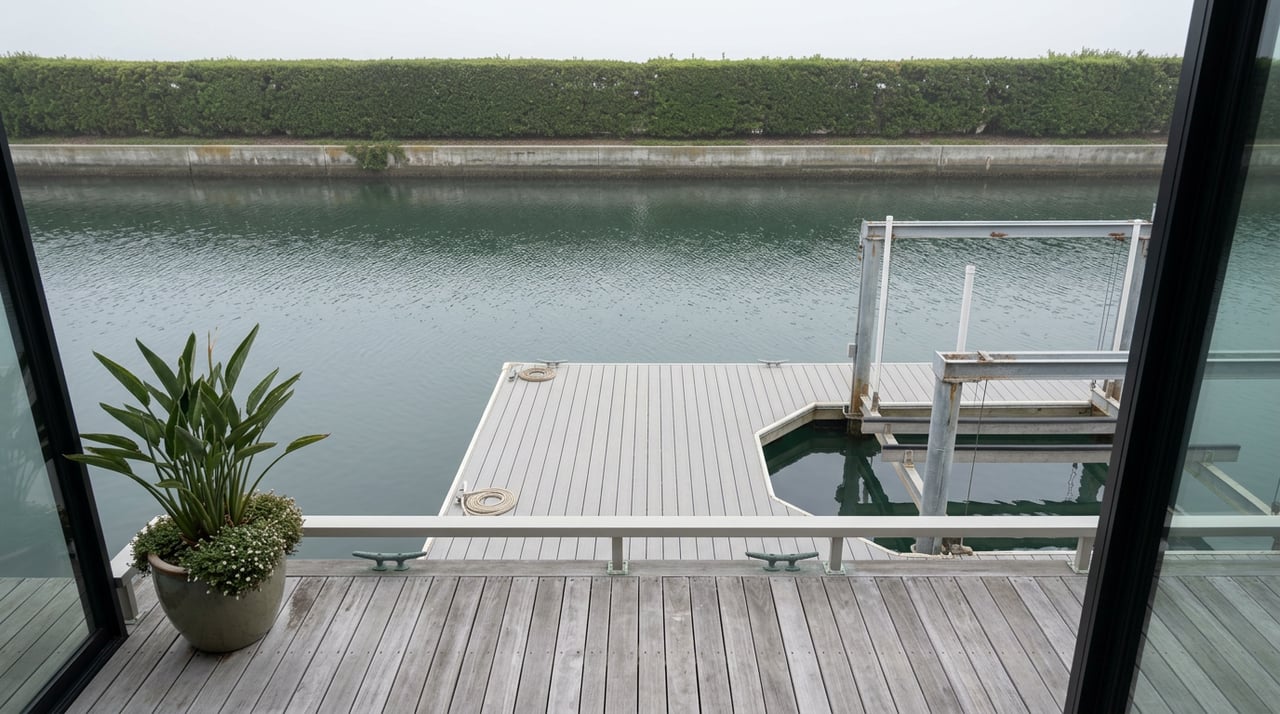
A buyer looking at Coronado Cays right now can find a canal-front townhome that includes a private boat slip, and the first thing they'll want to do after closing is add a new davit or extend the dock a few feet.
That canal-front setting is a useful entry point into comparing Coronado's three sub-markets. The city trades as one 92118 median, one number that shows up on every portal and every agent's market update. As of the three months ending May 2026, that median sale price sat near $3.0 million, up roughly 9 percent from the same period a year earlier. But Coronado isn't one market wearing a single price tag. It's three, and they land in overlapping price bands for entirely different reasons. A buyer comparing a Village cottage, a Shores tower unit, and a Cays canal home purely on price per square foot is comparing three different products that happen to cost about the same.
The overlap that hides the difference
Look at the numbers side by side and the overlap is immediate. Coronado Shores closed transactions in the first quarter of 2026 averaged $2,898,857, on homes averaging 1,415 square feet. In the same quarter, Coronado Cays closed transactions averaged $1,987,167 across nine sales, though active list prices in the Cays this year have ranged as high as $11.95 million for larger waterfront estates, with recent listings priced in the mid-$2 million range doing most of the volume. Village home prices span the widest range of the three, since the Village mixes historic cottages, remodels, and newer infill alongside condos.
Put a Shores unit and a Cays townhome next to each other at $2.9 million and they look like comparable purchases. They aren't. One is roughly 1,400 square feet in a fifteen-story tower with a doorman-style front desk. The other might be a two-story townhome on a canal with its own dock. The price overlaps. The deed, the governance, and the day-to-day experience of ownership do not.
What you're actually buying at the Shores
Coronado Shores is ten separate high-rise towers built along the beach south of the Hotel del Coronado, each with roughly 135 units across fifteen floors. Here's the detail that matters most for anyone comparing carrying costs across the three sub-markets: each tower runs its own condominium association, with its own board, its own budget, and its own reserve study, layered under a master association that oversees shared amenities like the Beach Club, Roeder Pavilion, pools, tennis courts, and the health club. Monthly HOA dues run from roughly $801 for a studio up to $1,716 for a three-bedroom unit, and that range varies tower by tower rather than following one Shores-wide schedule.
What you're actually buying in the Cays
Coronado Cays is a planned marina community on the Silver Strand, organized into ten named sub-villages including Jamaica, Trinidad, Mardi Gras, Port Royale, and Green Turtle, with more than 600 boat slips spread across roughly 1,200 condos, townhomes, and custom homes. The centerpiece is the Coronado Cays Yacht Club, founded in 1972, which runs a 58-slip marina along with a clubhouse, restaurant and bar, pool, spa, and bocce courts. Membership matters here. You don't walk in off the street.
The tradeoff for that water access is distance from everyday village life. The Cays sits about five miles from Orange Avenue, meaning residents drive rather than walk for groceries, coffee, or a casual dinner. Some buyers see that as the whole appeal, a quieter, more self-contained setting than central Coronado. Others find it a genuine adjustment if they're used to stepping outside for anything they need.
The HOA here isn't just a billing entity either. The Coronado Cays Homeowners Association runs departments for accounting, landscaping, maintenance, docks, member services, operations, and safety, which is a heavier layer of shared infrastructure than a typical single-family HOA.
What you're actually buying in the Village
The Village is the widest and least standardized of the three products. It includes historic Craftsman bungalows and early-20th-century cottages alongside remodels, detached homes, and newer infill condos and townhomes, all under the city's Orange Avenue Corridor Specific Plan. Ownership here is genuinely fragmented. Some detached homes carry no HOA at all. Condos and townhomes have dues that vary property by property rather than following a single community-wide fee schedule.
What the Village sells that the other two don't is walkability. The area posts a Walk Score of 93, and that number reflects an actual daily pattern: Orange Avenue's shops and restaurants, Bay Books, and the Coronado farmers market are all within an easy walk or bike ride. If your priority is stepping outside and being in the middle of things, the Village is the only one of the three sub-markets built around that experience by default rather than as an amenity package.
The rule that applies no matter which one you pick
One friction point cuts across all three neighborhoods and it's worth knowing before you shop any of them. The City of Coronado has restrictions on residential rentals, and individual HOAs can layer additional leasing restrictions on top of that citywide rule.
Reading the comparison correctly
None of this means one Coronado sub-market beats the other two. It means the median price you see on a listing sheet is doing very little work for you as a comparison tool. A $2.9 million Shores unit and a $2.9 million Cays townhome carry different HOA governance, different lender scrutiny, different amenity access, and a different daily radius of what you can reach on foot. The Village trades some of that structure for flexibility, at the cost of a less standardized ownership experience from one property to the next.
The better question isn't which sub-market is priced right. It's which ownership structure you actually want to live inside. Do you want a single-tower HOA with a defined reserve study and a master association handling the beach club, or a centralized association with its own dock department and an architectural review committee, or a patchwork of Village properties where the real answer depends on the specific building's governing documents? That's the comparison a median price can't make for you, and it's the one that determines what your first year of ownership actually feels like.
If you're weighing a purchase across Coronado's sub-markets and want a clear read on how a specific property's HOA, financing eligibility, or dock rights actually work before you write an offer, Fine Properties San Diego can walk you through the details particular to that building or block. Request a complimentary market valuation and let's look at what a specific address in the Village, Shores, or Cays actually buys.
This article is general information, not legal, tax or financial advice. Consult a qualified professional about your situation.